There’s something satisfying about a freshly cleaned kitchen or bathroom. Unfortunately, that feeling doesn’t last particularly long when your home has hard water. White marks reappear around faucets, the kettle develops a chalky coating, and glass shower doors lose their sparkle despite your best efforts.
For many homeowners throughout the Treasure Valley, learning how to reduce hard water scale with softening is a practical step toward easier household maintenance and better management of mineral-related problems.
Instead of constantly purchasing descaling products and spending weekends scrubbing stubborn deposits, why not address the underlying cause? Understanding how water softening works can help you make informed decisions that benefit your home for years to come.
Why Hard Water Leaves Its Mark Everywhere
Hard water contains dissolved minerals, primarily calcium and magnesium, which it naturally collects while traveling through soil and underground rock formations.
When water evaporates, these minerals remain behind. Over time, they form the familiar chalky deposits that appear on bathroom fixtures, kitchen sinks, showerheads, and glass surfaces.
Heating hard water can also encourage mineral accumulation inside certain household appliances.
The frustrating part is that even regular cleaning doesn’t prevent these deposits from returning. You might remove every visible trace of limescale today, only to find new marks appearing later in the week.
While hardness levels vary across Boise, Meridian, Nampa, and surrounding communities, a simple hardness test can help determine whether your water supply is contributing to these problems.
Addressing Hardness Instead of Constantly Cleaning It Away
Cleaning products certainly have their place, but they only address the deposits that have already formed.
Effective water softening solutions tackle the underlying issue by reducing dissolved hardness minerals before they contribute to new scale accumulation throughout your household plumbing.
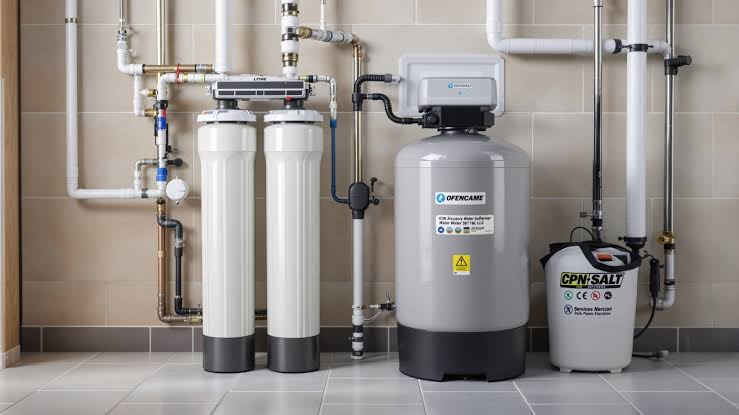
Traditional softeners use a process called ion exchange. Water flows through specialized resin beads that capture calcium and magnesium ions while exchanging them for sodium or potassium ions.
The resin is periodically regenerated to restore its treatment capacity.
This process helps reduce the formation of new limescale and improves soap performance.
For households dealing with particularly hard water, the difference can become noticeable through everyday activities rather than just occasional maintenance tasks.
Choosing a Water Softener That Fits Your Household
There’s no single treatment system that automatically suits every property. Household size, water consumption, plumbing arrangements, and measured hardness levels all influence equipment requirements.
When comparing water softeners for homes, look beyond the initial purchase price and consider treatment capacity, regeneration efficiency, maintenance requirements, and installation accessibility.
A busy family with several bathrooms may require considerably more softening capacity than a couple living in a smaller property.
Demand-initiated systems regenerate according to measured consumption, potentially avoiding unnecessary regeneration cycles associated with fixed schedules.
Private well owners may also need additional treatment if their water contains elevated iron or other substances that interfere with softener performance.
Choosing equipment based on actual water conditions makes much more sense than simply purchasing the largest available model.
How Softer Water Changes Familiar Household Routines
The benefits of softening often become apparent in surprisingly ordinary moments. You might notice that shampoo lathers more easily or that freshly washed towels feel less rough.
Bathroom surfaces may require less frequent descaling, and glassware may develop fewer hardness-related spots.
There can also be opportunities to reduce detergent consumption once you’ve adjusted your cleaning habits.
Interestingly, softened water can initially feel different during bathing. That slightly slippery sensation sometimes surprises people who have spent years using hard water.
Getting accustomed to these differences may take a little time.
Eventually, though, many of the small conveniences become part of a more manageable household routine.
Looking After Your Water Heater and Other Appliances
Household appliances aren’t cheap, and replacing them unexpectedly can put considerable pressure on your budget.
Excessive hardness contributes to mineral accumulation inside certain appliances, particularly equipment that regularly heats water.
Scale deposits can interfere with heat transfer and create additional maintenance requirements.
Appropriate softening helps limit new mineral buildup, potentially supporting appliance performance and reducing certain scale-related concerns.
However, softened water won’t automatically repair existing mechanical damage or remove every old deposit.
Regular appliance maintenance remains important.
Think of water treatment as a preventive approach to looking after the equipment you already own. Addressing excessive hardness today may help minimize avoidable mineral-related problems down the road.
Understanding the Responsibilities of Water Softener Ownership
A water softener needs occasional attention to continue working effectively.
Traditional systems require salt replenishment, appropriate regeneration settings, and periodic servicing. Salt bridges or other maintenance issues can sometimes interfere with normal operation.
Before installing equipment, ask about ongoing salt expenses, regeneration water consumption, replacement components, and recommended maintenance schedules.
Periodic hardness testing can also help confirm that the system continues performing as expected.
Additionally, remember that softening isn’t the same as drinking water purification. Separate filtration may be necessary to address unwanted tastes, odors, or specific contaminants.
Understanding these distinctions helps you maintain realistic expectations and make better long-term decisions about your household water supply.
Enjoy a More Comfortable Home With Fewer Hard Water Frustrations
Life in the Treasure Valley offers plenty of reasons to enjoy your free time rather than spending another afternoon removing stubborn mineral deposits.
Start by testing your water, understanding your household requirements, and choosing equipment that offers practical long-term value.
A thoughtfully selected softener can make everyday activities easier while helping protect household fixtures from additional scale accumulation.
After all, a comfortable home isn’t necessarily defined by expensive renovations or impressive furnishings. Sometimes, it’s the freedom from those repetitive little frustrations that makes the greatest difference.
Fewer chalky deposits, easier cleaning, and more enjoyable showers are simple improvements. But when you experience them every day, their value becomes difficult to overlook.